BACK

Jackson Brown

Who are you? 

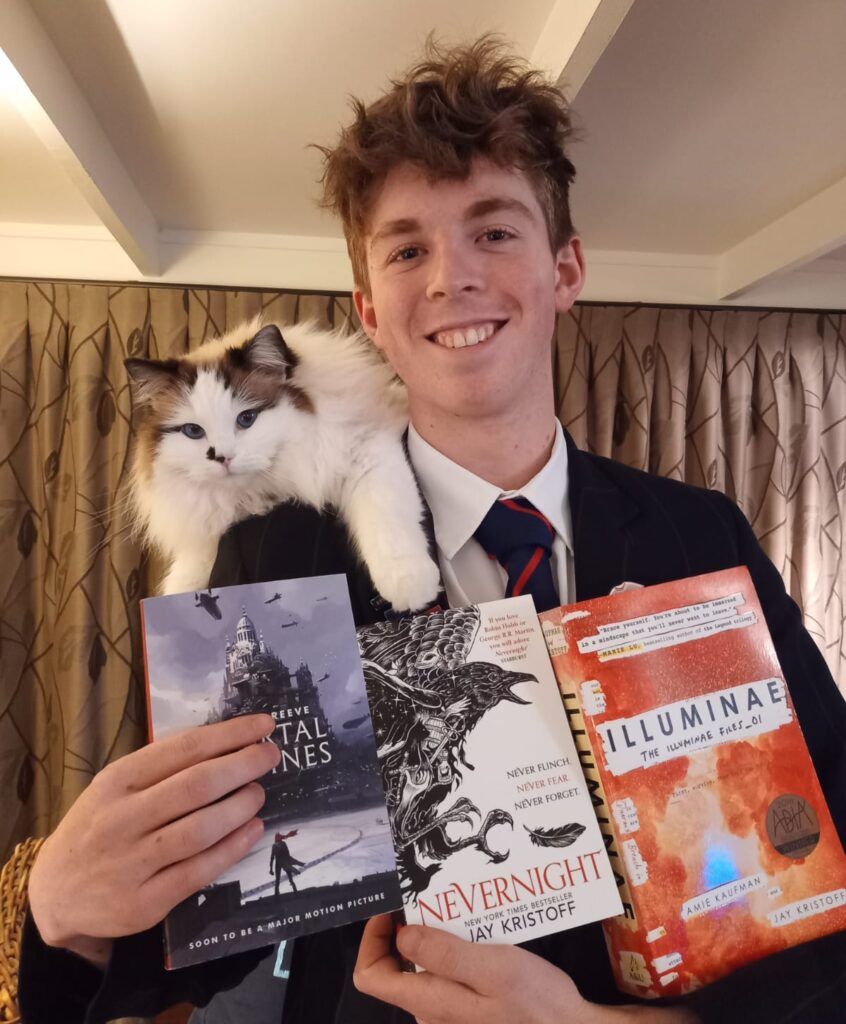
Hi!! My name is Jackson Brown, and I’m a Year 13 Pastoral Leader here at Rangi. In my spare time, I’m a writer and poet, and I run Novel Writing Club and Poetry Club, alongside being a Student Librarian. 


What are you currently reading?

I’m currently reading The Dungeon Anarchist’s Cookbook, Book 3 of Dungeon Crawler Carl by Matt Dinniman. It’s a very odd book, but it seems quite cool so far. An important thing about this series, which, to be honest, is quite inspiring, is that the author writes them without plotting them out first. Whilst I’m not sure if this extends to the series as a whole, it’s very well done, especially considering this. The Lit RPG genre (which combines elements of tabletop or video games with literature) continues to be incredibly unique. I’m looking forward to reading the rest of the series.


What’s your favourite book, and why?

This is an incredibly mean question for all readers, so I think I might have to give three in response. Firstly, The Illuminae Files by Amie Kaufman and Jay Kristoff. It’s a sci-fi trilogy told very unconventionally, through mission reports, ship schematics and the like, following seven characters who have been caught up in a conspiracy by an evil corporation. It’s inspired all sorts of weird storytelling ideas in my head ever since I read it in Year 10. Secondly, a classic which has been cited as many student’s favourite: Nineteen Eighty-Four, by George Orwell. It serves as a highly applicable story to many situations, and, whilst not explicitly a horror story, is definitely something everyone should read at least once. Finally, the Stormlight Archive by Brandon Sanderson – whilst it’s only half complete, it’s already nearly 6000 pages long, across five books. It might be the best fantasy series ever written, with themes around mental health, which I really enjoyed. 


When you’re not reading, what do you love doing?

If I’m not reading, I’m often writing. Since Year 9, I’ve been attempting to write a novel without plotting it out first, something I gave up on earlier this year. It was Churchill that said, “If you fail to plan, you plan to fail,” so I plan to follow his advice by planning out my plot a bit more. I very much enjoy both fantasy and dystopia, as an astute reader might be able to tell from above, so those two genres are what I write in. I’m also very proud of my poetry when I write it, until a few days later when I realise that it needs serious revision and that it’s not as deep as I thought.

I also don’t want to diminish the amount of time I spend on leadership, homework, and procrastination in my day to day life; there’s always something I should technically be doing instead of reading. But being on the Pastoral Leadership Team for the past 3 years has been one of the greatest experiences of my life, given how many people I’ve gotten to know through it. 

I also very much enjoy spending time with my cat, Orion.


What are some mottos you live by?

A book I haven’t mentioned yet is R.J Palico’s Wonder; a book I read when I was about the same age as August, the main character. An English teacher in that book had these various philosophical concepts known as “precepts” but the one that always stuck with me was the first, which reads, “When given the choice between being right and being kind, choose kind,” originally said by Dr. Wayne W. Dyer. Like in the book, I often shorten it to simply, “Choose kind.” What I’m trying to say is, above all else, be true to yourself and be kind to others – if everyone lived with kindness and the willingness to understand others, and less hatred, competition, self-righteousness, we’d live in a much better place. 


What do you love about our library?

I’d be lying if I didn’t say that being a student librarian here is incredibly good fun. I’ve loved learning the workings of a library, and passing that on to members of my team. I’m really sad that my time as a librarian is coming to an end – recently, I’ve enjoyed bugging the librarians about ensuring the spine labels of different book series are correct. The other aspect of the library that I love is the range of books. In my Year 9, I met a Year 13 student librarian who said that they’d read a whole shelf of books, because they were bored. I don’t know how they ever got bored in the first place, because the amount of random books I’ve picked up and then just really loved is plentiful. 


What’s a book you can recommend to others, and why? 

There’s so many books I love, but I’ll try and cut it down to a top few. For people who don’t read that much, I’d recommend Percy Jackson and the Olympians by Rick Riordan, and Skulduggery Pleasant (but only like the first nine books). I would say Percy Jackson is probably what turned me into the reader I am today. It’s a better version of Harry Potter, which has some humour which I found hilarious when I was younger. Conversely, I’m pretty sure Skulduggery Pleasant gave me nightmares in intermediate, because it’s not exactly middle-grade. My dad read it at the same time as me, and also really enjoyed it. For people who already read, as I mentioned earlier, I firmly believe everyone should read Nineteen Eighty-Four. It’s just so interesting. Finally, a series I read when I was probably too young to full grasp it was Mortal Engines by Phillip Reeve. It probably has one of the most unique sci-fi concepts I’ve ever read, and the entire series is just incredible. Spanning 30 years and nearly every continent, it explores what the world would be like if consumerism really took off – people who have read it may appreciate my pun.


What are some of your hopes and dreams for the future?

Next year, I’m hoping to go down to Wellington to study political science. One of the main draws of Wellington is the IIML (International Institute of Modern Letters) where the first, and most prestigious, creative writing course in New Zealand was founded. I would love to do a few creative writing papers there as part of my degree! 

In the future, I’d like to work in some form of policy or public service in the government, so Wellington seems like a great place to do that. I’m looking forward to meeting lots of new people there.

Aside from university, I’m hoping to travel literally everywhere as soon as possible. I’m a big fan of Classics, so Rome is probably my number one destination, followed by going to see beautiful places in Europe, and visiting my relatives in the UK. But to be honest, I’d just like to see outside of New Zealand a lot more, as I’ve been fortunate enough to see quite a lot of this country. Whatever comes, however, I’m very much looking forward to it!
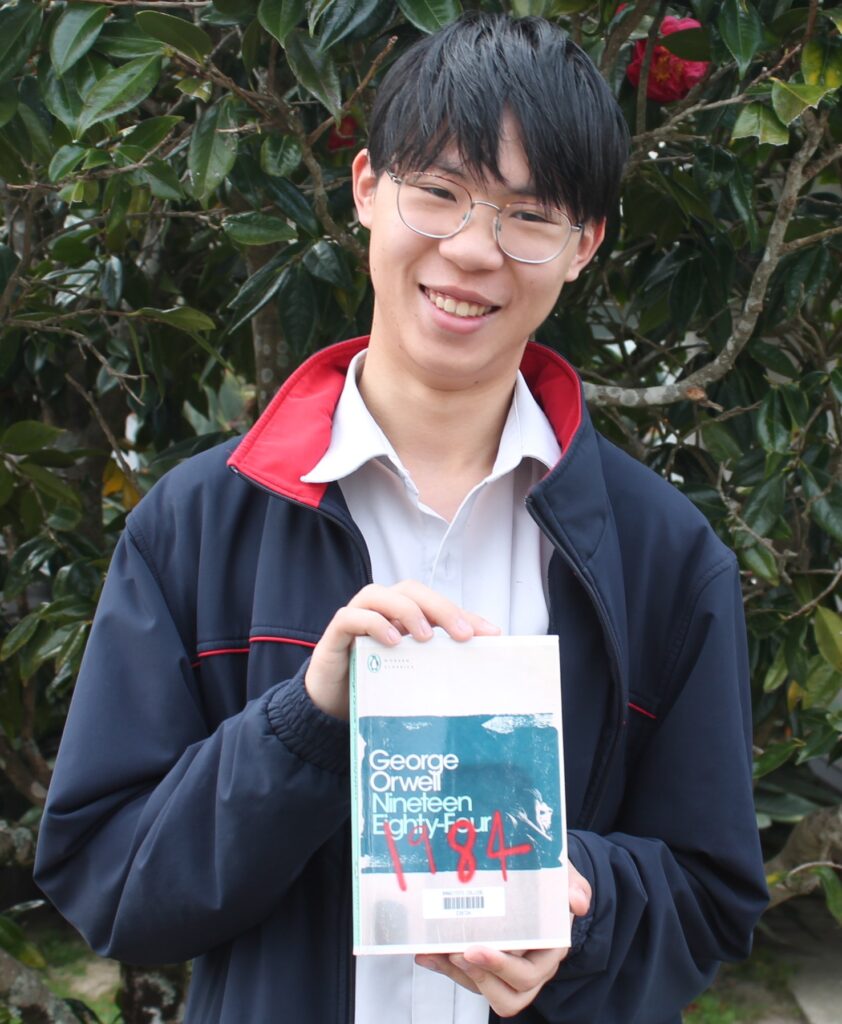
Lucious 光 (Akira) Matthews

Who are you?
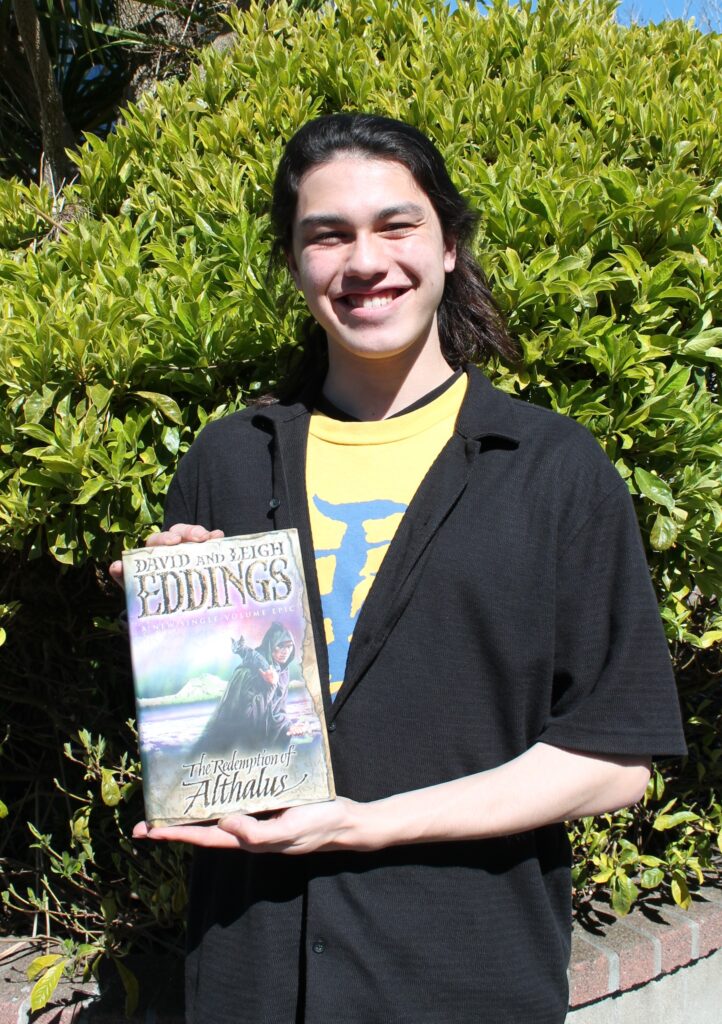
My name is Lucious 光 (Akira) Matthews. I am currently a Year 13 at Rangitoto college and have moved here from Westlake Boys after Year 10.


When you’re not reading, what do you love doing?

I love writing for my next Dungeons and Dragons session, tending to my garden, playing Magic the Gathering and playing various roguelite games.


What’s a book you remember reading/having read to you when you were younger? 

The books I best remember being read to me as a youngin was Alice’s Adventures in Wonderland and the Tale of Redwall series by my Dad before I went to bed along with my sister. I adored how he’d take up characters and perform them to us and go off on small tangents when answering our questions or getting caught on certain historical or philosophical topics hidden in the books.


Tell us a brilliant book memory?

A book that held me through its sheer brilliance will always be H.P. Lovecraft’s The Colour Out of Space. Its atmospheric depictions and remarkably detailed vagueness captured how I see and hear the world around me, contextualizing those experiences in an inspiring and delightful way. 


What are some books you’ve encountered (and enjoyed) at school? 

The Knife of Never Letting Go by Patrick Ness came as quite a surprise to me when Ms. Russell taught it in Year 11. Despite my initial hesitation toward a required class text, I fell in love with the novel and ended up buying my own copy.


What do you love about our library?

It has got to be the people. Above the books within the library I love the staff that work there and the fellow classmates who take the time to take care of the place. 


What’s a book that’s changed your mind about something?

Gleipnir, written and illustrated by Sun Takeda, shifted how I viewed body horror as a narrative device. It was Gleipnir’s mix of optimistic messaging and near-Eldritch horror that challenged my perception of the genre. Rather than relying on gratuitous violence and gruesomeness just to showcase cruelty, the series demonstrates that horror can be used to tell a much more meaningful story. 


What are you currently reading?

I’m currently reading Petals of Reincarnation by Mikihisa Konishi. It’s a banger.


What’s a book you always recommend and why?

I don’t have a specific book to be honest. My general advice is to venture outside of your typical go to’s. If you normally read medieval fantasy, have a look at sci-fi, if you normally read superhero action try a slice of life romance. Just try something. You’ll be able to better appreciate and enjoy what you have by trying other things, you’ll train your ability to critically think and analyse simply by being able to like something over another. Overall, it’s better to look around and broaden your horizon than to box yourself in and never grow.


What’s your favourite book?

To be honest I don’t have a favourite book… I have a mindset similar to Anton Ego from Ratatouille, “I don’t like food; I LOVE it. If I don’t love it, I don’t swallow.”


Where do you seek inspiration?

I don’t look for inspiration, inspiration just comes. At a certain point in life, it becomes natural to see what is around you and want to transform it into your own view and incorporate yourself into it. Humans are meant to create, not consume. It is the innate desire of everyone to be remembered. All the stories and essays I write and the prints that I make are the way they are because I am able to observe the world around me, extract ideas and emotions from what I find, connect and transform them into greater ideas to then deliver through my mediums.


Why do you think people should read?

If you do not read, you do not observe. If you do not observe you are neglecting the fundamental core of humanity; our observatory skills and our ability to connect what we sense to what we know to then transform them. To read is the first of many more to be human.


What are some mottos you live by?

“Believe in the you that believes in yourself.”


Describe your perfect Saturday/Sunday?

My perfect weekend would have the day start early and flow by with table top and video games as well as watching series or movies with friends and family with massive meals and an early sleep.


Who would you love to have lunch with (dead or alive)?

I’d love to just have a picnic style lunch with all of my school friends. I love being able to casually sit around and share jokes, stories and food.


What advice are you grateful you’ve received?

“Listen, boy. Never forget. Just believe in yourself. Not in the you that I believe in; not in the me that you believe in. Have faith in the you who believes in you.”


What are some of your hopes and dreams for the future?

To be honest, I just want to live quietly tucked away in a swamp somewhere making prints and telling stories for the rest of my life like some fairytale lich. But on this day, I just want to be a good person who can have fun and appreciate the time I have. I think I’m close to both these goals.


Do you think you resonate with a story because you see yourself in it or because the text is good?

To answer this in a roundabout manner, I think I have resonated with texts the most when I don’t see myself in them but rather themes and ideas that connect me to the character to a greater scale of things. Texts that are able to connect with me on a deeper scale, through elements like my personal feelings, thoughts, values, or my own experiences with themes prove to be “good”. In short, because the text is good I can resonate with them.

Raymond Chen

Who are you?

Kia ora. I’m Raymond Chen (feel free to call me Ray), just a regular Year 12 student at this kura, your average hole-up-at-home gamer + nerd hybrid. I also try my best to get along with others throughout the kura. I’m not the most sociable guy out there, but I am quite approachable (although most of the time you may see me with a somewhat annoyed expression).

You can usually see me hanging around between C and D block. If not, most likely I’m hurdling around the kura managing errands and personal business, or just wandering around without a sense of direction for no specific reason.


When you’re not reading, what do you love doing?

I sit back and relax in my bed by going online to check out my favourite composers, such as Camellia, or cooking up new dishes whenever inspiration strikes. I also tend to get carried away in my studies in STEM-related subjects (most of the time, calculus) to prepare for a few scholarship exams in Year 13. Above all else, I find sleep to be a luxury, so arguably, one of my most loved activities is simply a huge sleep-in.


What are some books you’ve encountered (and enjoyed) at school? (Either here or a previous school)

In Year 8, I came across Fish in a Tree by Lynda Mullaly Hunt for a novel study I was initially reluctant about. Given my English skills around that, handwriting and reading skills were disastrous, and I was regularly bullied for my deficits, I deeply resonated with the character, Ally, whose situation felt similar to mine. Participating in that novel study felt like being put on a pedestal for public shaming, especially considering my moderate ADHD impaired my focus and made me look incapable of English-based skills. However, I genuinely enjoyed the book on an emotional level because I empathised deeply with Ally and felt less isolated as an outlier in an English-speaking environment.

Looking back, even though Ally’s condition is dyslexia, my reaction now is basically ‘lol yeah, close enough’ which is a far cry from how I would have reacted back then. Because my ADHD symptoms have reduced to next to none by now, I feel really grateful for that book. It gave me the courage and confidence to keep striving toward improvement, knowing that I would eventually enter a formal academic environment. It also taught me to view my ADHD not as a cause of alienation, but as a toolset to delve into a deeper understanding of literature, allowing me to see more diverse interpretations of texts than I ever imagined.


What’s a book that’s changed your mind about something?

I used to solely believe in the “just-world hypothesis” before Year 11, soaked in the belief that good people will always live good lives, and bad people will always receive divine karma. When I came across Montana 1948 by Larry Watson, that mindset was shattered completely and utterly.

There is a character named Mary Little Soldier, who is David Hayden’s (the protagonist) babysitter. Although David is incredibly fond of her, she is later murdered by Frank Hayden, the town doctor. Although Frank is well-regarded as a war hero, he is secretly a predator who abuses Indigenous Americans. Through Mary’s death, I realised that being “inherently good” and “living a good life” are never mutually inclusive. Ever since, I’ve held a more cynical view of society, embracing the principle of mediocrity: that the universe does not revolve around humanity, and that nature operates on physical laws completely indifferent to our values, beliefs, and suffering. In the end, I came to accept the inherently flawed nature of mankind, appreciating the elegance within the natural chaos and disorder playing out around us every second. Ultimately, embracing these imperfections and witnessing this unfairness is how I marvel most at the beauty of this entropy.


What’s a book you always recommend and why?

1984 by George Orwell. You may have heard of this book; if not, in summary, it is a fascinating critique of the epistemological limits bound to us as humans. As someone always intrigued by the flawed nature of the world, I find this book gives incredible insight into the validity of the knowledge we acquire today, as well as the fundamental components of the human ego and thought. It is reminiscent of the Sapir-Whorf model of linguistic determinism; that the thoughts we are able to formulate are strictly bound by the words we have to conceptualise them.

Although the novel mainly revolves around totalitarianism and state control through artificial fear and loyalty, the manipulation of language is what I think encompasses the core of the book. Orwell’s introduction of core concepts such as Newspeak and doublethink reveals the critical vulnerability and fragility of our human ego: when presented with a horrifying truth and a sugarcoated lie, our primal instinct is almost always to accept the lie for comfort, stripping away our ability to confront the truth. For instance, the B vocabulary fascinates me most; the act of conjoining two words as a neologism critically exposes our tendency to associate two concepts (such as “Joycamp” for a labor camp) without intrinsically parsing the reality of the term. This demonstrates the detrimental impact of omnipresent surveillance on critical thinking, objective reality, and individuality, rendering a person unable to recognise the harsh reality behind the sugarcoating.


Where do you seek inspiration?

I don’t have a fixed source of inspiration. My ideas always come and go in a flash. They can be so unpredictable that I’m barely aware of them before they’re right on the tip of my tongue! They come completely at random, while I’m cooking, studying, or just wandering around without a particular purpose.


Why do you think people should read?

I believe that only through reading can we truly appreciate the beauty in the world’s imperfections. Only by accepting and embracing these imperfections can we grow into more mature versions of ourselves. Plus, reading broadens your scope of knowledge, makes you a more well-rounded person, and gives you shared ground to connect with others.


What are some mottos you live by?

“Success breeds complacency. Complacency breeds failure. Only the paranoid survive.” — Andy Grove, Former CEO of Intel 

“There is nothing in the world more shameful than establishing oneself on lies and fables.” — Johann Wolfgang von Goethe 


Describe your perfect Saturday/Sunday?

Huge sleep-in, get up, cook up some comfort food, get into my studies with chill music, play lots of gacha games, go to bed, repeat.

Mrs Michaella White

Who are you?

Mrs White – currently a trainee teacher here at Rangitoto College. 


When you’re not reading, what do you love doing?

I am a very active person, in particular I love to dance (both teaching it and taking classes myself) as well as do anything related to netball (play, coach, watch…the lot!).


What do you love about our library/working at Rangitoto College?

The students are fabulous and this school has so many opportunities – it’s very special to see that there is a community for everyone here.


What were you doing before this role?

I worked in marketing for a global media agency, creating content for amazing brands both in print form and online. My clients ranged from confectionery brands (such as Cadbury, Pascall, Oreo, Sour Patch Kids) and cereals (Weetbix, in particular we ran the Stat Attack campaigns) all the way to dairy (Anchor, Mainland cheeses, etc.). Before that, I worked in social media and influencer marketing where I ran campaigns on TikTok and Instagram. That included brands such as Adidas, Converse, Mac Cosmetics, Casio, and more. All in all, I’ve had some very cool jobs! 


What was on the family bookshelf growing up?

A little bit of everything to be honest! I had many hand-me-down books from my grandparents which included some of the classics. There was quite an eclectic mix of genres since my sisters enjoyed wildly different genres to me. Although, a book that always brought us together was Watership Down.


Do you remember reading/loving any books at school?

The Handmaid’s Tale was my Year 12 novel study, but it instantly became one of my favourite books of all time. Not a book, but I loved studying Shakespeare at school too. Othello was my favourite and still is to this day.


What are you currently reading? 

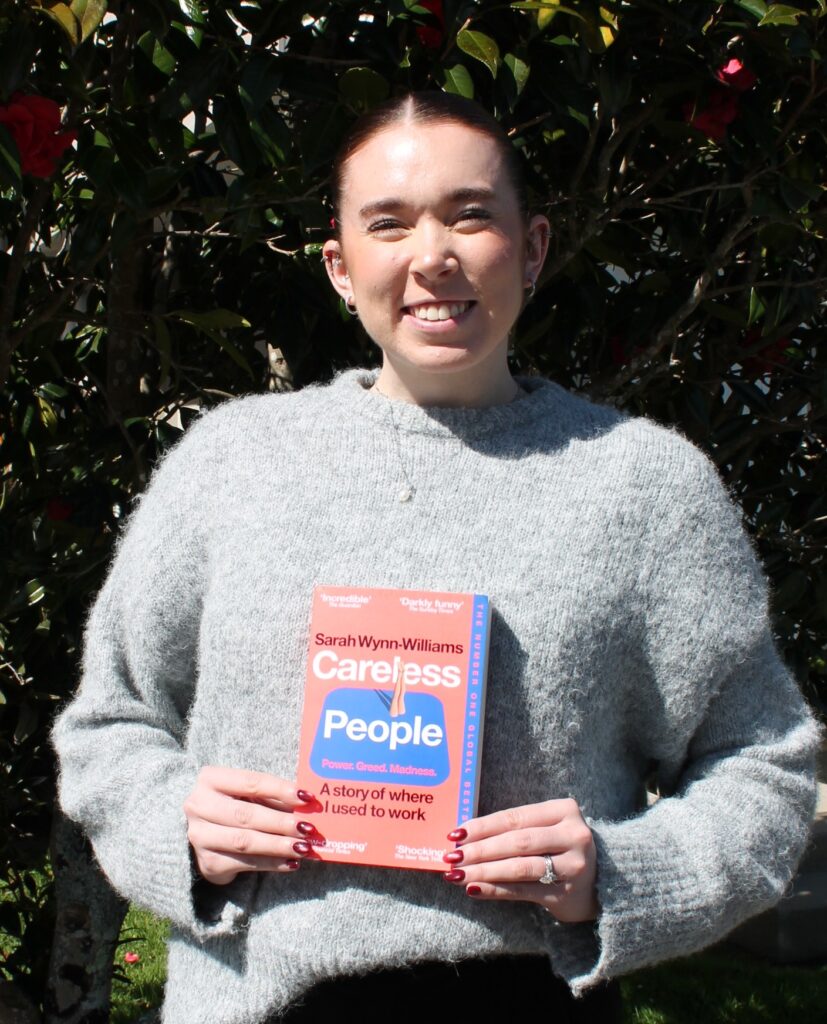
I have just started reading Careless People, a non-fiction book by Sarah Wynn-Williams. Originally from New Zealand, Wynn-Williams trained as a lawyer and worked as a diplomat in America before campaigning for a role at Facebook where she could help them navigate the political landscape and conversations with world leaders. She worked at Facebook from 2011 – 2017 rising to be Director of Public Policy. However, her dream job turned out to be a total nightmare, for so many reasons. It’s super interesting so far!

Anna Armitage

Who are you? 

Hi, I’m Anna and I’m a Year 13 International Student at Rangitoto College, having moved here alone from England to finish high school in January 2025. During my time at the kura, I’m grateful to have been a Culture and Globalisation Student Leader, involved in various clubs and also in organising the High Five World Record. I’m always somewhere doing something and making the most of embracing all the opportunities that come my way. My enthusiasm for learning (and reading) has been instrumental to shaping the way I approach things, even from a young age. 


When you’re not reading, what do you love doing?

Sidequesting and filling my time with things that bring me joy. I do a variety of side projects outside of school which keep me busy, and I love meeting new people, visiting new places and making each new day better than the last. 


What’s a book you remember reading when you were younger? 

I actually learnt to read at a very young age so my earliest memories of books are probably the British school classics like Biff, Chip and Kipper and also Michael Morpugo. I remember being quite fond of the Swallows and Amazons series by Arthur Ransome and also Heidi by Johanna Spyri too. 


What are some books you’ve enjoyed reading at school? 

At my previous school one of our texts was An Inspector Calls for GCSE which was great to analyse and link to modern life today. I have enjoyed studying Persepolis (Marjane Satrapi) and Purple Hibiscus (Chimanmanda Ngozi Adichie) as part of IB English Lang and Lit here at school too.


What do you love about our library?

Our library is so big! There are so many books from so many different genres- there is something for everyone. 


What’s a book that’s changed your mind about something?

When I was about 11, I read It’s Your World: Get Informed, Get Inspired & Get Going! by Chelsea Clinton, after visiting the United Nations in New York. That book sparked an interest in global problem solving, but it changed my mind that I could be involved in doing something about what I read about. Yes I could see the statistics, the graphs and the stories from different places, but it switched my mindset from perhaps feeling a little un-useful, to being encouraged that even small steps matter. 


What are you currently reading?

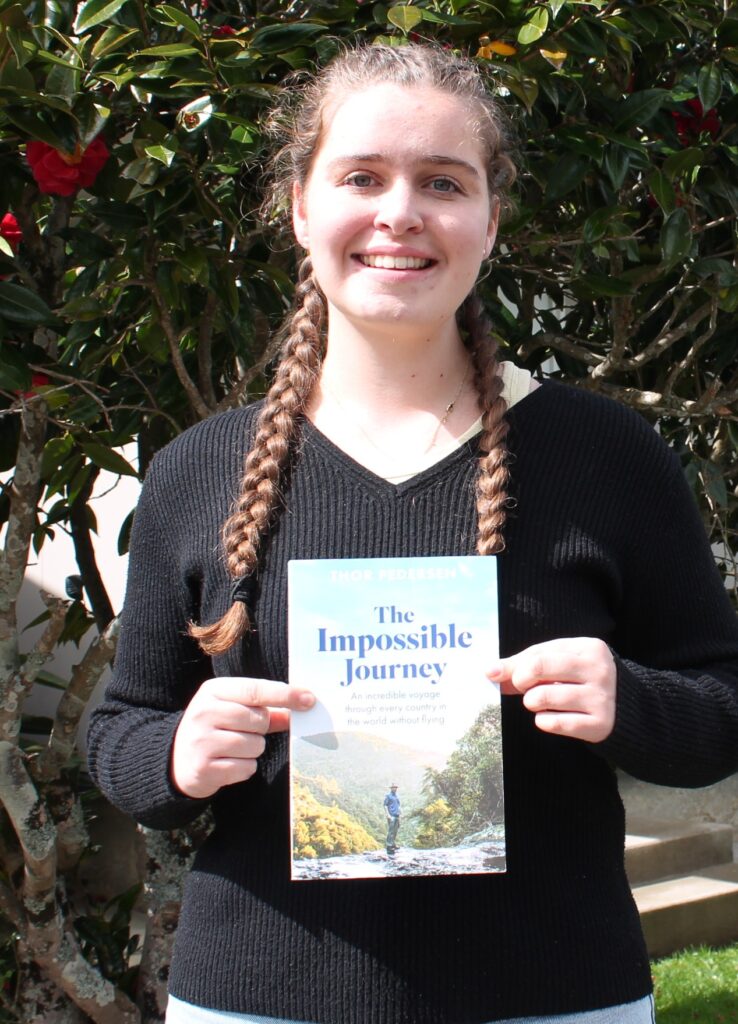
I’m currently reading The Impossible Journey by Thor Pedersen which is about a guy who went to every country without flying. It’s incredibly fascinating to read about his experiences, learn about cool things he witnessed in different places and cultures, and I suppose the lessons he learnt en route. 


What’s a book you can recommend to others, and why? 

Prisoners of Geography by Tim Marshall is, undoubtedly, one of the most interesting books I’ve read. This 420-page wonder helps to explain how the world around us – people, ideas and movements – are influenced. Understanding why we are the way we are, not just constrained to opinion, but circumstances, will give you a better insight on how we navigate political discussions. 


Why do you think people should read?

Reading is a gateway to deeper perspective. Expanding your knowledge, understanding and emotional intelligence, in a variety of contexts, is important. The more you read, the more you know and perhaps the more you appreciate life.

This applies to both fiction and non-fiction. 


Where do you seek inspiration from?

Firstly, I love to surround myself with inspiring people who catalyse me to keep improving and persevering. My circle, with friends, family and mentors, inspires me. But I also take inspiration from people like Erin Meryl McGurk, Mia McGrath, Scott Harrison, Bear Grylls etc- I could go on.


What are some mottos you live by?

  • Everything is a win if the goal is experience.
  • Audacity will get you further than apprehension will.
  • Discipline is hard, but so is regret.


Name a figure, either from your own life, a historical figure, or a celebrity (alive or otherwise) who you would love to have lunch with. 

Corrie Ten Boom. 


What advice are you grateful you’ve received?

  • Take one day at a time. Do not worry about tomorrow- it’ll worry about itself.
  • Authenticity matters. Why be a duplicate of someone else when you can be an original?
  • Find your values, pick your priorities, and make your life a reflection of the person the younger version you would aspire to be. 
  • Get mentors for different areas of your life. Life-changing recommendation.


What are some of your hopes and dreams for the future?

Not entirely sure where and what I will end up doing, but I know I have a list of things that I made when I was 14 haha, of what I want to achieve before I turn 21, so we’ll see how many of those I can tick off! 🤣

But I think regardless, combining my passions, values, skills and the ways I want to serve people – I hope to see a world more united in cooperation and communication. I hope that even as we get more “connected”, that we can prioritise human connection and ingenuity too.

Having this international student exchange opportunity in Aotearoa has taught me lots, not just in education, but about myself and what impact I can have on the world. 

Kia kaha, kia māia, kia manawanui. (Be strong, be brave, be steadfast)